LupusGPT Named Finalist for the 2025 Made With Patients Awards: A Milestone in Patient-Driven Innovation


We are thrilled to announce that LupusGPT (https://lupusgpt.org/ ), LUPUS EUROPE’s patient-led initiative to provide reliable, accessible lupus information, has been selected as a finalist for the 2025 “Made With Patients Awards” in the Best Tools Implementation category, powered by Patient Focused Medicines Development (PFMD). This global recognition celebrates the power of patient engagement and co-creation in transforming healthcare, and we are honoured to be recognised for our collaborative efforts to empower lupus patients with access to valid information.

A teal background with geometric patterns featuring text that reads, "Proud to stand among change-makers as a Made with Patients Awards 2025 Finalist," alongside the PFMD logo and a "Made with Patients" tag.
LupusGPT proudly stands as a finalist for the 2025 Made With Patients Awards, celebrating impactful patient-driven innovation! 🏆

What is LupusGPT?

LupusGPT is a groundbreaking easy to use artificial intelligence (AI) tool designed to bridge the gap in valid lupus-related information for patients. By leveraging advanced large language models and a carefully curated library of medically validated content on lupus, LupusGPT delivers accurate, up-to-date, patient-friendly answers about lupus in multiple languages. Its companion tool, EasyLupus, offers answers in even simpler language to ensure accessibility for people who find medical information even in lay language confusing or those facing challenges such as severe brain fog, not uncommon in lupus patients.


LupusGPT is operated by LUPUS EUROPE, a patient led not for profit organisation, to ensure it remains independent from commercial interests, fully free of charge, with no registration and no advertising.

A screenshot of the LupusGPT website by Lupus Europe, featuring a purple background with the text "Reliable answers to all your lupus questions, anytime" and a toggle switch between Lupus GPT and EasyLupus versions, with flags indicating multilingual support.
Explore LupusGPT, the AI tool by Lupus Europe, offering reliable, multilingual lupus information anytime at lupusgpt.org!

Since its launch few months ago, LupusGPT has reached 5,047 active users across 34 countries, with 36,942 interactions recorded. Its natural multilingual capabilities have broken language barriers, providing information on lupus in languages as diverse as Arabic, Tagalog, Zulu, and many more. This inclusivity ensures that lupus patients, regardless of where they are or what their native language is, can access trusted information about their condition.


The initiative is a testimony to the power of collaboration. Lupus Europe, a patient-led organisation, spearheaded the project, bringing together lupus patients, specialist lupus doctors, AI specialists and industry partners to develop it. Patients shaped the tool’s development from conception to testing, while clinicians ensured medical accuracy, AI experts offered technical expertise and industry partners provided legal, PR and Technology watch outs and advice. This multi-stakeholder approach has made LupusGPT a truly patient-centred resource.


About Lupus Europe

LUPUS EUROPE is the European umbrella organisation that brings together national lupus patient organisations from across Europe. We are a non-profit independent organisation. We aim to support and empower our National Members, sharing information with them and promoting better patient-centred processes. We also work tirelessly to improve access to healthcare for all lupus patients, advocating on their behalf at EU level. We use the WHO (World Health Organisation) definition of Europe as a region, rather than a political entity.


Since our humble beginnings in 1990, we have grown to represent 30 countries which, in turn, represent over 34,000 patients in their respective memberships. LUPUS EUROPE is considered a valued partner at medical conferences, in European healthcare organisations fighting for wider patients’ rights, and in Europe-wide initiatives aimed at improving healthcare and setting “standards of care” for lupus patients. We see research and clinical trials as key to the future of lupus patients and work with all stakeholders to improve the quality and efficiency of all lupus research.


LUPUS EUROPE, until 2020 was a UK based charity (803768). From 2021 LUPUS EUROPE moved and became a Belgium based non-profit organisation (0758.650.658).


About the Made With Patients Awards and PFMD

The Made With Patients Awards, organised by Patient Focused Medicines Development (PFMD), celebrate initiatives who champion meaningful patient engagement in healthcare. PFMD is a global coalition dedicated to embedding patient voices in the development of medicines and healthcare solutions. By fostering collaboration between patients, healthcare professionals, industry, and other stakeholders, PFMD drives systemic change to ensure healthcare is built with patients, not just for them.


The Best Tools Implementation category recognises initiatives that creatively adapt existing technologies to benefit patients. LupusGPT’s nomination in this category highlights its innovative use of AI to deliver reliable lupus education, its multilingual accessibility, and its commitment to evolving based on feedback. Being named a finalist is a powerful acknowledgment of the initiative’s impact and the collaborative spirit behind it.


Why This Matters

This recognition is a celebration of the European lupus community’s resilience, creativity, and determination to improve the lives of people with lupus and to fill a critical need for accessible, trustworthy information around the condition. Every step of its development has been guided by patient voices, from selecting content to testing language capabilities to refining the user experience through beta testing.


The finalist status also highlights the importance of partnerships. Lupus patients, clinicians, industry partners, and AI developers worked together to create a tool that is not only effective but also sustainable and scalable. LupusGPT’s open-access model ensures long-term availability, while ongoing updates selected jointly by lupus doctors and patients keep it aligned with the latest medical advancements. Plans for a fully voice-activated EasyLupus later in 2025 will further enhance accessibility, particularly for those with visual impairments or literacy challenges. We also hope that the visibility brought by this recognition will increase the tool’s reach.


Looking Ahead

The winners of the 2025 “Made With Patients Awards” will be announced at the Patient Engagement Open Forum (PEOF) 2025 in Italy on June 11, 2025. Whether you’re joining in person or tuning in online, we invite you to follow this moment with us. You will soon be able to register to watch the live ceremony through this link: https://patientengagement.synapseconnect.org/campaign/made-with-patients-awards-2025-mwpa


This milestone is just the beginning. LupusGPT has the potential to serve as a model for other patient organisations, offering a scalable, low-cost solution for delivering reliable information. We are committed to sharing our insights and best practices to support similar initiatives for other diseases, contributing to breaking down barriers for patients.


A Heartfelt Thank You

While this initiative has been led forcefully by Lupus Europe, it would never have been possible without the engagement and enthusiasm of every single patient, clinician, partner, and supporter who believed in LupusGPT’s vision. Your voices, experiences, and dedication have made this initiative a reality. Together, we are proving healthcare works better when it’s built with patients.


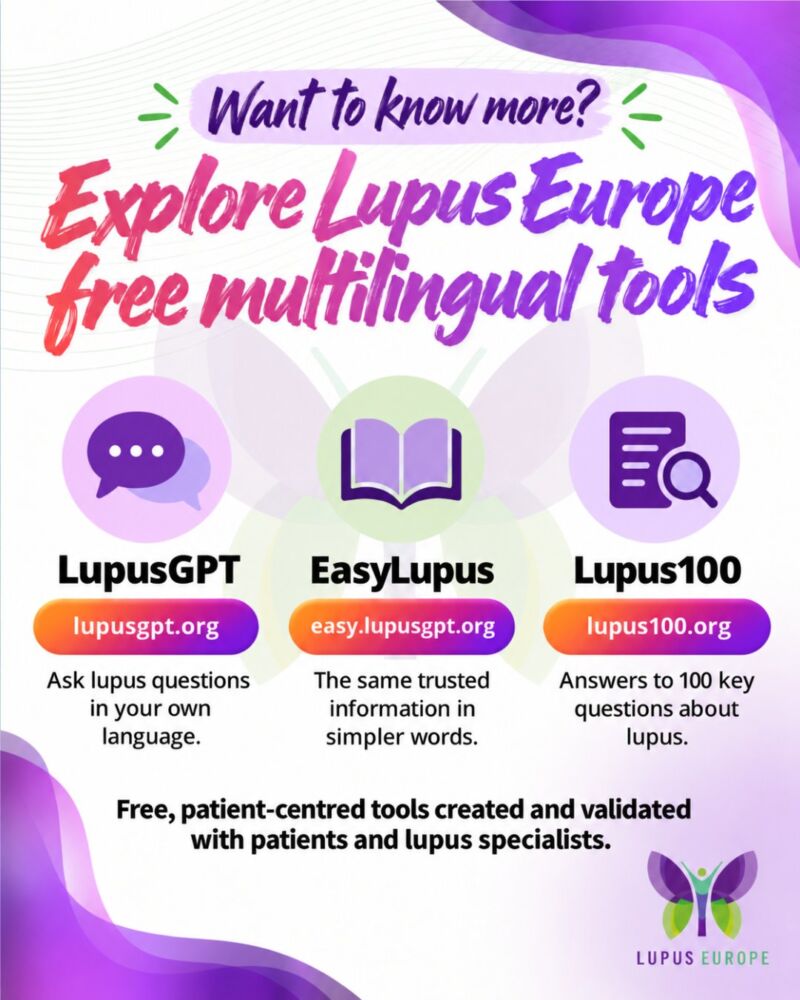
Stay tuned for updates as we head toward the awards ceremony and join us in spreading the word about LupusGPT. Visit https://lupusgpt.org/ and https://easy.lupusgpt.org/ to explore the tool, and follow us on social media for the latest news.


#LupusGPT #MadeWithPatientsAwards #PFMD #PEOF2025 #PatientEngagement #HealthEquity #LupusEurope


Live Facebook Feed

Comments Box SVG iconsUsed for the like, share, comment, and reaction icons

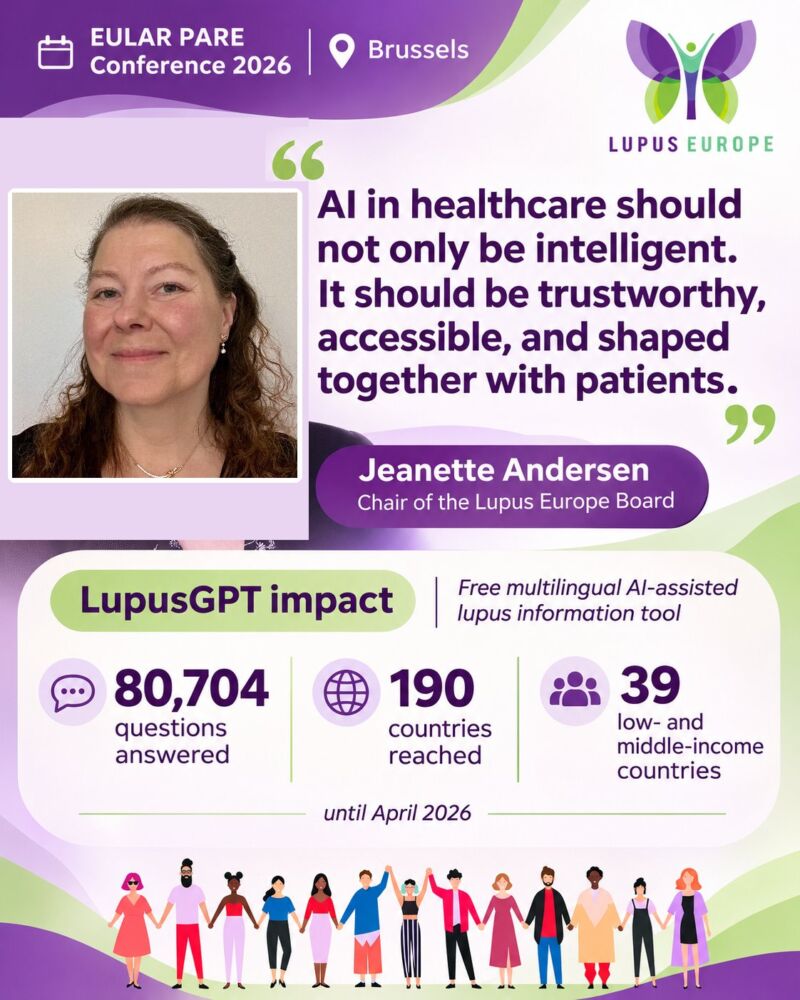
💜 We've taken part in the EULAR PARE Conference 2026 in Brussels! And what an interesting opportunity to discuss the future of AI in healthcare!

🌍 Bringing together more than 100 delegates and speakers from across Europe and beyond, the conference explored some of the most important questions surrounding artificial intelligence in rheumatology and patient advocacy.

From the opportunities and risks of AI to health inequalities, accessibility and European health policy, the discussions highlighted why patient perspectives must be part of the conversation.

🤩 We were particularly proud to see Jeanette Andersen, Chair of the Lupus Europe Board, sharing our experience with #LupusGPT in her presentation, “AI as a Partner in Care: Empowering the RMD Community with Information”.

💡 Jeanette explained how #LupusGPT was developed with patients and clinicians to offer free, multilingual access to reliable lupus information based on validated sources.

She also introduced #EasyLupus, which provides the same trusted information in simpler language, highlighting why accessibility must be considered when developing AI tools.

But one of the most important messages from her presentation went beyond technology.

💜 Patient organisations have much more to contribute to AI than simply using tools developed by others.

As Jeanette highlighted, patient organisations bring lived experience, knowledge of unmet needs, trusted information and an understanding of the barriers people face when accessing health information.

Technology alone cannot tell us what patients really need or what makes a tool genuinely useful.

Patients and patient organisations should not simply be users of AI. They should help shape its development.

👏 A big thank you to EULAR PARE for bringing together so many different perspectives and creating space for meaningful discussions about the future of healthcare and patient involvement!
...

💜 Weve taken part

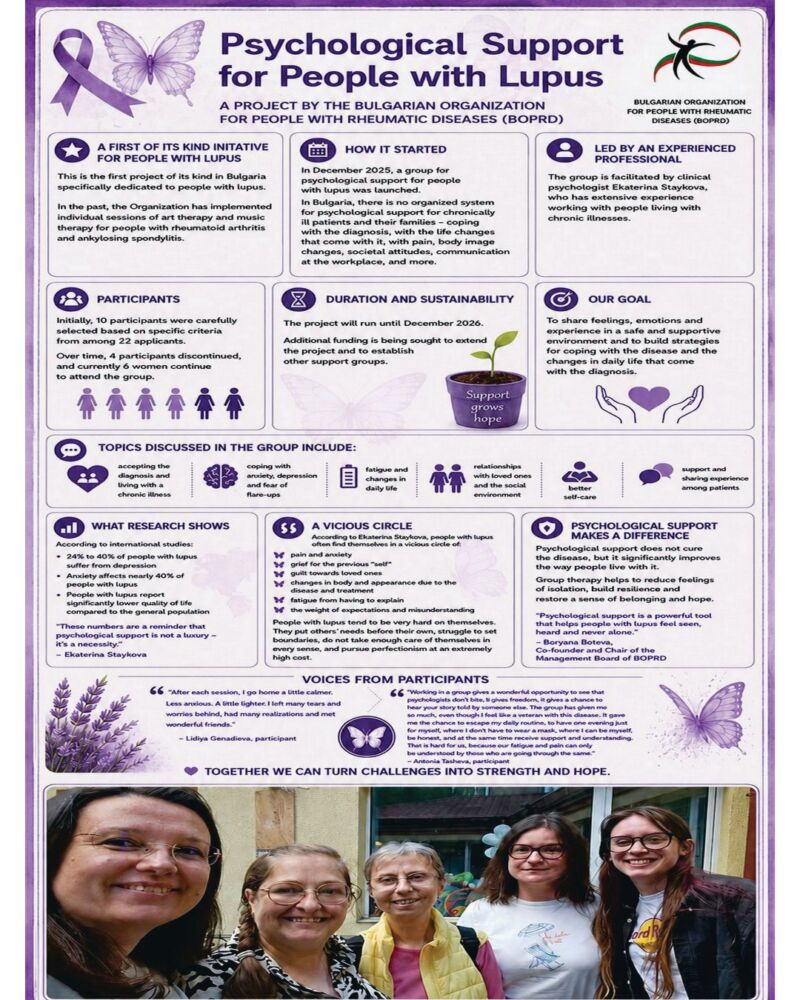
🦋 One of the greatest strengths of patient organisations is the support, understanding and sense of community they offer to people living with lupus. 💜

🇧🇬 A great example comes from Организация на пациентите с ревматологични заболявания, who shared their psychological support initiative at the #LupusConvention!

💜 Launched in December 2025, this pilot project provides a safe and supportive space where participants can share their experiences and discuss the challenges of living with lupus, from fatigue and anxiety to relationships and everyday life.

👥 Led by a clinical psychologist, the group currently brings together six women. The project is expected to run until December 2026, while the organisation explores funding opportunities to continue and expand the initiative.

Thank you to our Bulgarian colleagues for sharing their experience, and congratulations on the amazing job you are doing! ❤️

🌍 This is just one example of the valuable work patient organisations are doing across Europe, often responding to needs that go beyond medical care. We'll share more in the coming days!

💜 Are you living with lupus? You don't have to navigate everything alone! Your national lupus organisation may offer information, support, activities and opportunities to connect with others who understand your experiences.

🔗 Find your national lupus organisation and get in touch:
lupus-europe.org/lupus-members/
...

Image attachment
Image attachment

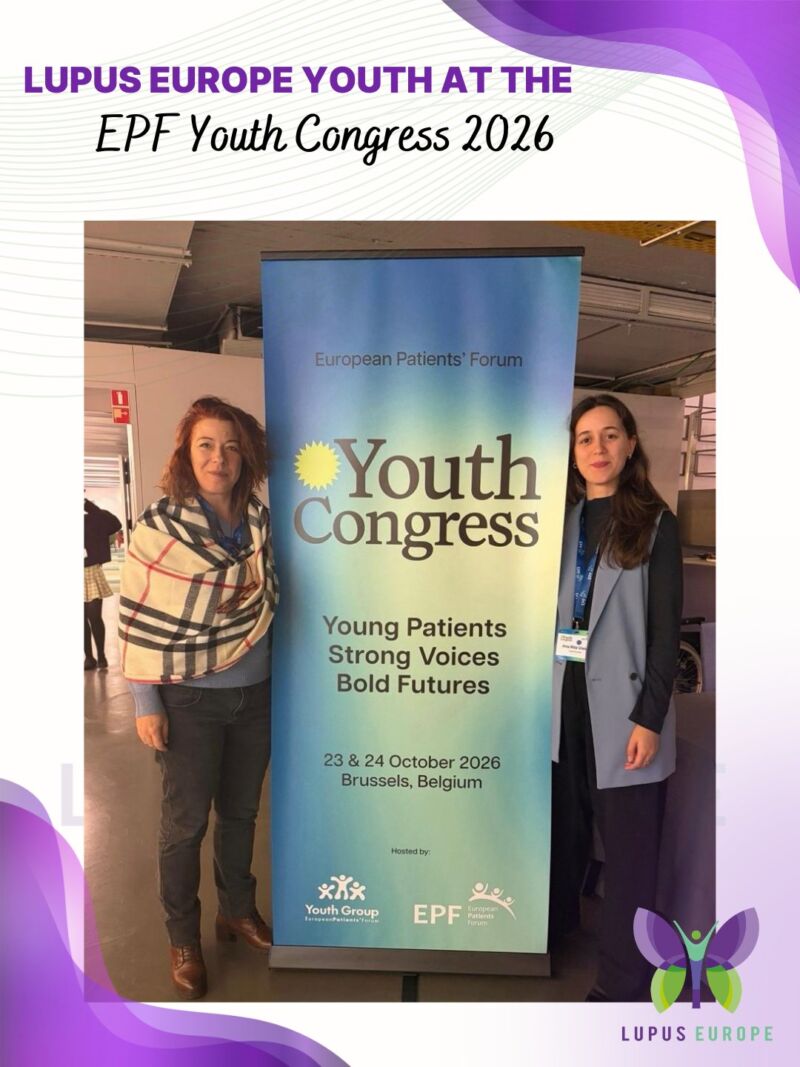
💜 Young people living with lupus are not only the future of patient advocacy. Their voices matter today!

On 23 and 24 October, LUPUS EUROPE was delighted to be represented at the first 𝗘𝗣𝗙 𝗬𝗼𝘂𝘁𝗵 𝗖𝗼𝗻𝗴𝗿𝗲𝘀𝘀 𝟮𝟬𝟮𝟲 in Brussels by Ana Rita Vieira, from the LUPUS EUROPE Youth Group, and Lena Koskina, LUPUS EUROPE's Youth Group Coordinator.

🌍 Organised by European Patients' Forum and its EPF Youth Group, the Congress brought together young patient advocates from across Europe to explore the challenges facing young people living with chronic conditions, from economic uncertainty and climate change to the barriers they encounter when trying to influence healthcare decisions.

🌟 One particularly important question ran through the discussions: 𝗵𝗼𝘄 𝗱𝗼 𝘄𝗲 𝗺𝗼𝘃𝗲 𝗯𝗲𝘆𝗼𝗻𝗱 𝘀𝗶𝗺𝗽𝗹𝘆 𝗴𝗶𝘃𝗶𝗻𝗴 𝘆𝗼𝘂𝗻𝗴 𝗽𝗲𝗼𝗽𝗹𝗲 𝗮 𝘀𝗲𝗮𝘁 𝗮𝘁 𝘁𝗵𝗲 𝘁𝗮𝗯𝗹𝗲, 𝗮𝗻𝗱 𝗲𝗻𝘀𝘂𝗿𝗲 𝘁𝗵𝗲𝘆 𝗵𝗮𝘃𝗲 𝗮 𝗿𝗲𝗮𝗹 𝘀𝗮𝘆 𝗶𝗻 𝘁𝗵𝗲 𝗱𝗲𝗰𝗶𝘀𝗶𝗼𝗻𝘀 𝗯𝗲𝗶𝗻𝗴 𝗺𝗮𝗱𝗲❓

The conversations also highlighted something easily overlooked: 𝗺𝗲𝗮𝗻𝗶𝗻𝗴𝗳𝘂𝗹 𝗽𝗮𝗿𝘁𝗶𝗰𝗶𝗽𝗮𝘁𝗶𝗼𝗻 𝗿𝗲𝗾𝘂𝗶𝗿𝗲𝘀 𝗺𝗼𝗿𝗲 𝘁𝗵𝗮𝗻 𝗮𝗻 𝗶𝗻𝘃𝗶𝘁𝗮𝘁𝗶𝗼𝗻. Young people living with chronic conditions are often balancing their health with education, employment and financial pressures. Advocacy opportunities need to recognise those realities, and not be accessible only to those who can afford the time and resources to participate.

🦋 At LUPUS EUROPE, supporting the Youth Group means actively helping create those opportunities, connecting young advocates with others across Europe and ensuring their perspectives can meaningfully contribute to the work we do.

Young people living with lupus are already advocates, bringing their experiences, ideas and knowledge into conversations that matter.

💜 Thank you to European Patients' Forum and its EPF Youth Group for bringing everyone together, and to Rita and Lena for representing LUPUS EUROPE at this important Congress!
...

💜 Young people li

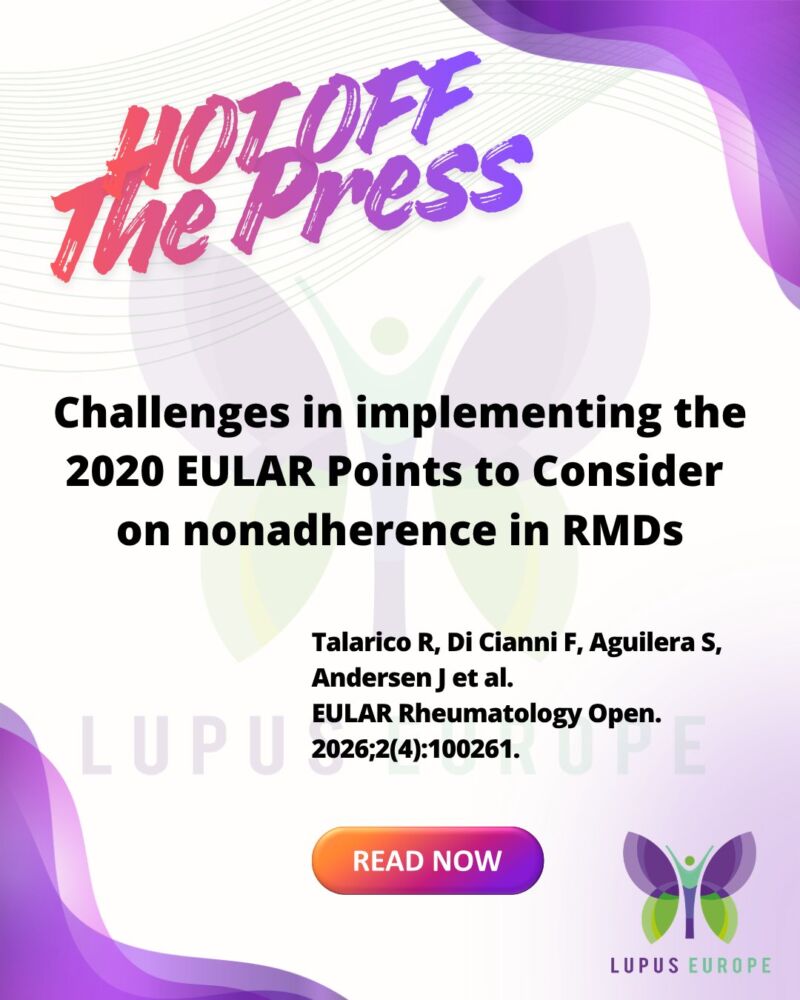
🔊 Hot off the press!

💜 Treatment adherence is important, complex and multifactorial.

But understanding the importance of treatment adherence is not the same as knowing how to support it in everyday clinical practice.

That’s why, in 2020, EULAR published its Points to Consider for the prevention, screening, assessment and management of nonadherence to treatment in people with rheumatic and musculoskeletal diseases.

But having recommendations is only the first step. How can we ensure they become part of everyday clinical practice?

🤩 An interesting new viewpoint published in EULAR Rheumatology Open, co-authored by Jeanette Andersen, Chair of the Lupus Europe Board, now explores the challenges of putting these recommendations into routine rheumatology care.

The article highlights that nonadherence is not simply a matter of individual patient behaviour. Concerns about treatment, practical difficulties, access to medication, socioeconomic circumstances and communication with healthcare professionals can all play a role.

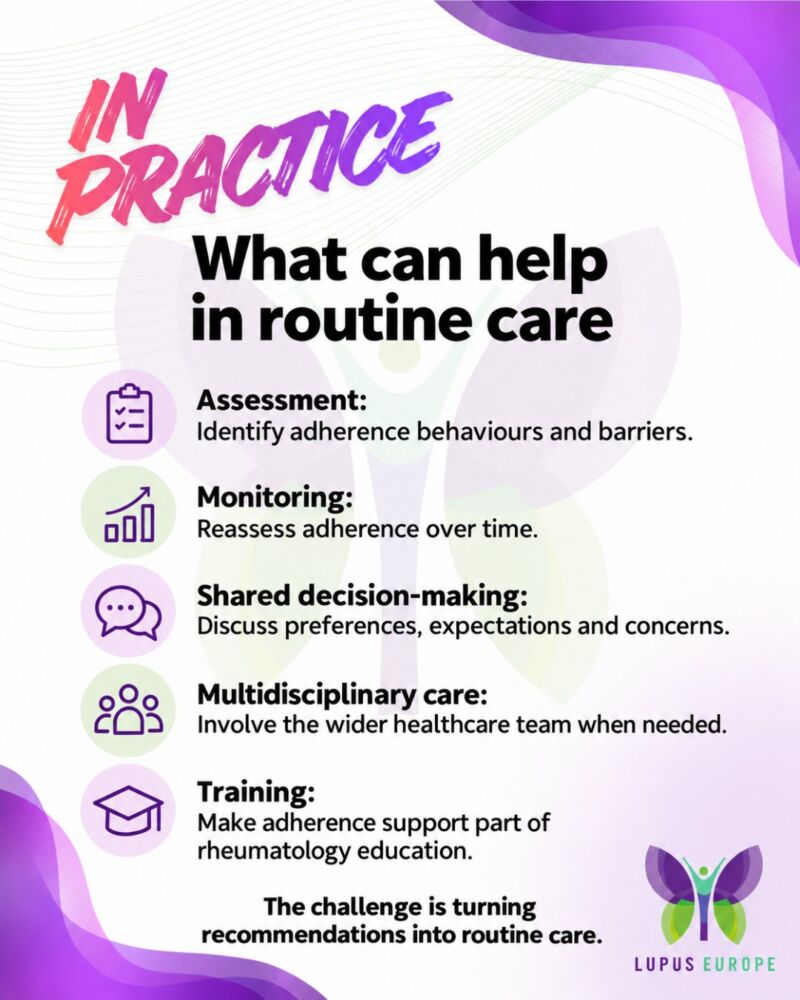
The authors highlight five key priorities for putting adherence support into routine rheumatology practice:

🔹 Assessment: Identifying adherence behaviours and the barriers behind them.
🔹 Monitoring: Reassessing adherence over time, as it may change throughout the disease course.
🔹 Shared decision-making: Discussing patients’ preferences, expectations and concerns through non-judgemental communication.
🔹 Multidisciplinary care: Involving the wider healthcare team according to individual needs.
🔹 Training: Making adherence support part of rheumatology education and professional development.

💜 The challenge is not the lack of recommendations, but making adherence assessment and support a routine part of rheumatology care.

📖 Read the open-access viewpoint: doi.org/10.1016/j.ero.2026.100261
...

Image attachment
Image attachment
Image attachment
Image attachment
LUPUS EUROPE Uniting people with Lupus throughout Europe
Send