Did you know? Lupus is a Rare Disease! Lupus is rare, but not for us! Come and join us working on our vision: A fulfilling life for all people with Lupus in Europe until we have reached a world without Lupus What is a rare disease? It changes from country to country, but in Europe […]
We would very much like to share some news with you! If you are a Lupus Europe member or potential member, volunteer or potential volunteer, or simply a member of the patient community interested in the activities of LUPUS EUROPE, join us on February 17, 2020 at 20:00 Paris time. On the agenda:– Introduction of […]
20th annual European Congress of Rheumatology took place in Madrid in June 2019. The Congress was hosted by the European League Against Rheumatism (EULAR) and jointly organised with the Paediatric Rheumatology European Society (PReS). There were 14,500 attendees from 120 countries and the scientific programme included presentations from 4,900 abstracts submitted. Three Trustees attended the […]
30 Years ago, on May 26, 2019, LUPUS EUROPE’s Constitution (then under the name of ELEF) was signed… The European Lupus Federation was born. as we celebrate this anniversary, we asked current and past Chairs to reflect on those years in support of People living with lupus in Europe. Yvonne Norton, Chair from 2002 […]
“INTEGRATing patient reported outcomes, clinical data and quality indicators to physician drive data in clinical management of chronic rheumatic diseases: the paradigm of Systemic Lupus Erythematosus” You may recall a request from Lupus Europe, on behalf of the Integrate Project, to complete an on-line survey. Over 750 people completed the questionnaire which is a fabulous […]
in only 2 days, the INTEGRATE and ERN ReCONNET surveys will be closed. Yet, we miss feedback from several countries, and only have 1 or 2 answers from others. It would really help our understanding of lupus and the interactions with Doctors if we had more answers from more locations. please help us gather that […]
The LUPUS EUROPE 2018 convention is underway in Leuven, Belgium and among the serious speeches on medical and psychological topics, we were delighted to be presented the beautiful (and very creative) word cloud entries in the Kick Lupus competition. All in all there were 35 entries to the competition, a great response! The judges on […]
In 1989, LUPUS EUROPE (then named ELEF)’s first convention took place near Brussels, in the historical city of Leuven. 29 years later, LUPUS EUROPE 2018 annual convention will once again take place in Leuven, and we are looking towards a record attendance with already 41 registrations confirmed. As the convention unfolds, we will make available […]
Today is the first day of the big European Rheumatology Congress, EULAR. The 2018 edition is being held in Amsterdam and will reunite thousands of delegates, mainly medical professionals. Eular is “a platform to facilitate interactions between patients, medical doctors, scientists, health professionals and professionals representing the pharmaceutical industry, both from within Europe and from […]
We at LUPUS EUROPE wish you all a great World Lupus Day, full of hope and awareness! For this we have created a little animated video about LUPUS EUROPE. Please feel free to share! [wpvideo ILoguQxs] We would also like to repost a video made a couple of years ago about the importance of World […]
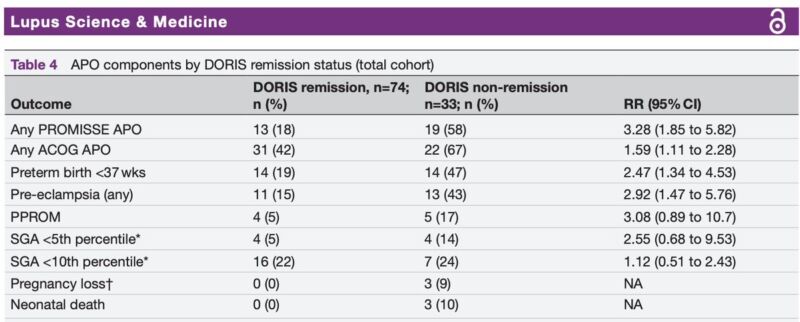
This international survey explores unsupervised glucocorticoid dose adjustment in #SLE.
Proud to have supported this study! Congratulations @cristianasieiro, @sarahdyball1, @gomezg_alvaro, @Jeanette_Lupus, @elis_chessa, @MartaMartamosca et al!
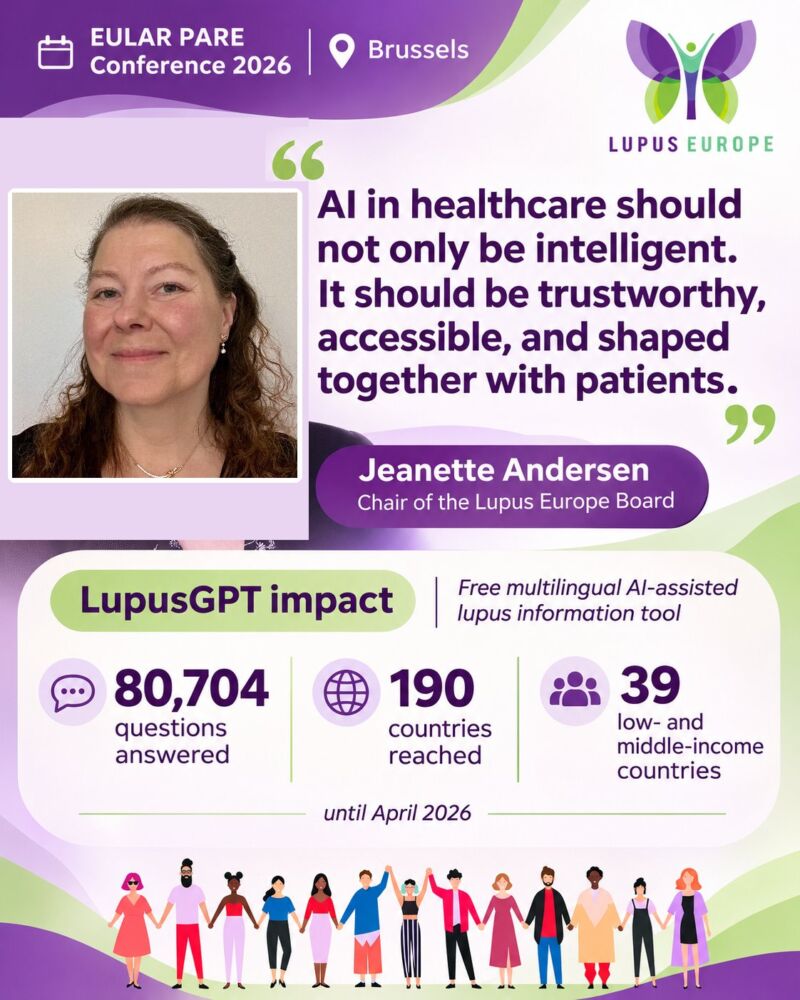
AI, health inequalities and EU policy were on the agenda at EULAR PARE Conference in Brussels.
Proud to take part, with @Jeanette_Lupus, Chair of the Lupus Europe Board, presenting #LupusGPT & the role of patient organisations in shaping responsible AI.
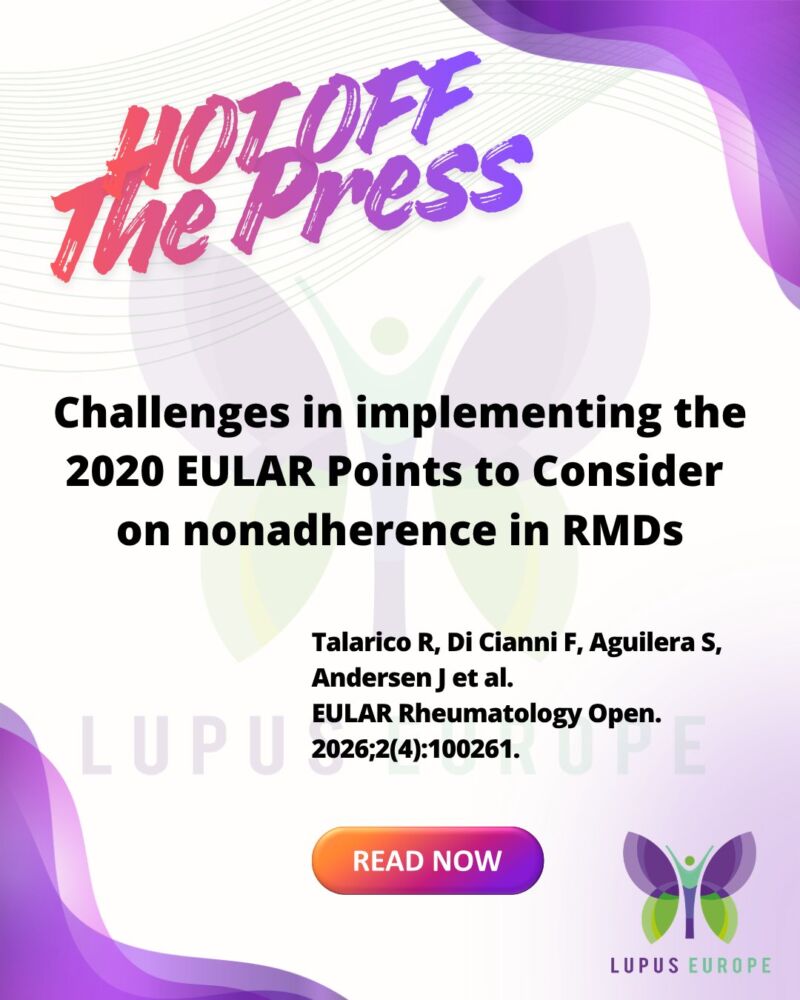
💜Treatment adherence is important, complex and multifactorial.
An interesting viewpoint on putting @eular_org recommendations into practice, with Chair of Lupus Europe’s Board @Jeanette_Lupus, @SaraTalarico2, @MartaMartamosca et al
💜 We've taken part in the EULAR PARE Conference 2026 in Brussels! And what an interesting opportunity to discuss the future of AI in healthcare!
🌍 Bringing together more than 100 delegates and speakers from across Europe and beyond, the conference explored some of the most important questions surrounding artificial intelligence in rheumatology and patient advocacy.
From the opportunities and risks of AI to health inequalities, accessibility and European health policy, the discussions highlighted why patient perspectives must be part of the conversation.
🤩 We were particularly proud to see Jeanette Andersen, Chair of the Lupus Europe Board, sharing our experience with #LupusGPT in her presentation, “AI as a Partner in Care: Empowering the RMD Community with Information”.
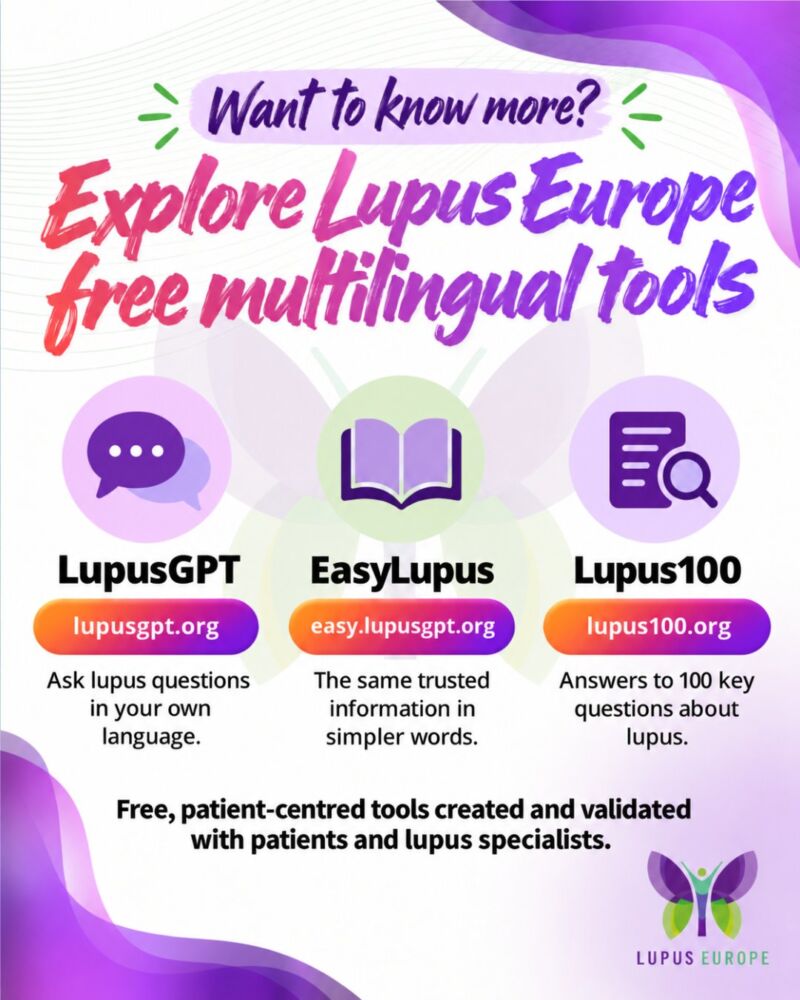
💡 Jeanette explained how #LupusGPT was developed with patients and clinicians to offer free, multilingual access to reliable lupus information based on validated sources.
She also introduced #EasyLupus, which provides the same trusted information in simpler language, highlighting why accessibility must be considered when developing AI tools.
But one of the most important messages from her presentation went beyond technology.
💜 Patient organisations have much more to contribute to AI than simply using tools developed by others.
As Jeanette highlighted, patient organisations bring lived experience, knowledge of unmet needs, trusted information and an understanding of the barriers people face when accessing health information.
Technology alone cannot tell us what patients really need or what makes a tool genuinely useful.
Patients and patient organisations should not simply be users of AI. They should help shape its development.
👏 A big thank you to EULAR PARE for bringing together so many different perspectives and creating space for meaningful discussions about the future of healthcare and patient involvement! ...
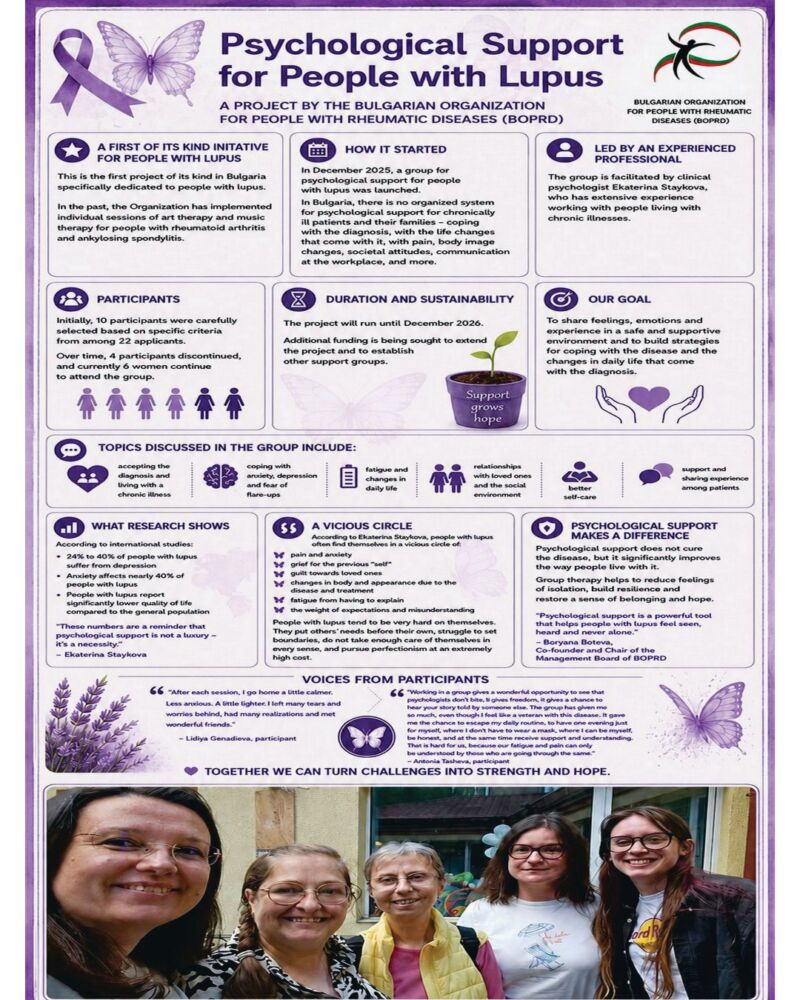
🦋 One of the greatest strengths of patient organisations is the support, understanding and sense of community they offer to people living with lupus. 💜
💜 Launched in December 2025, this pilot project provides a safe and supportive space where participants can share their experiences and discuss the challenges of living with lupus, from fatigue and anxiety to relationships and everyday life.
👥 Led by a clinical psychologist, the group currently brings together six women. The project is expected to run until December 2026, while the organisation explores funding opportunities to continue and expand the initiative.
Thank you to our Bulgarian colleagues for sharing their experience, and congratulations on the amazing job you are doing! ❤️
🌍 This is just one example of the valuable work patient organisations are doing across Europe, often responding to needs that go beyond medical care. We'll share more in the coming days!
💜 Are you living with lupus? You don't have to navigate everything alone! Your national lupus organisation may offer information, support, activities and opportunities to connect with others who understand your experiences.
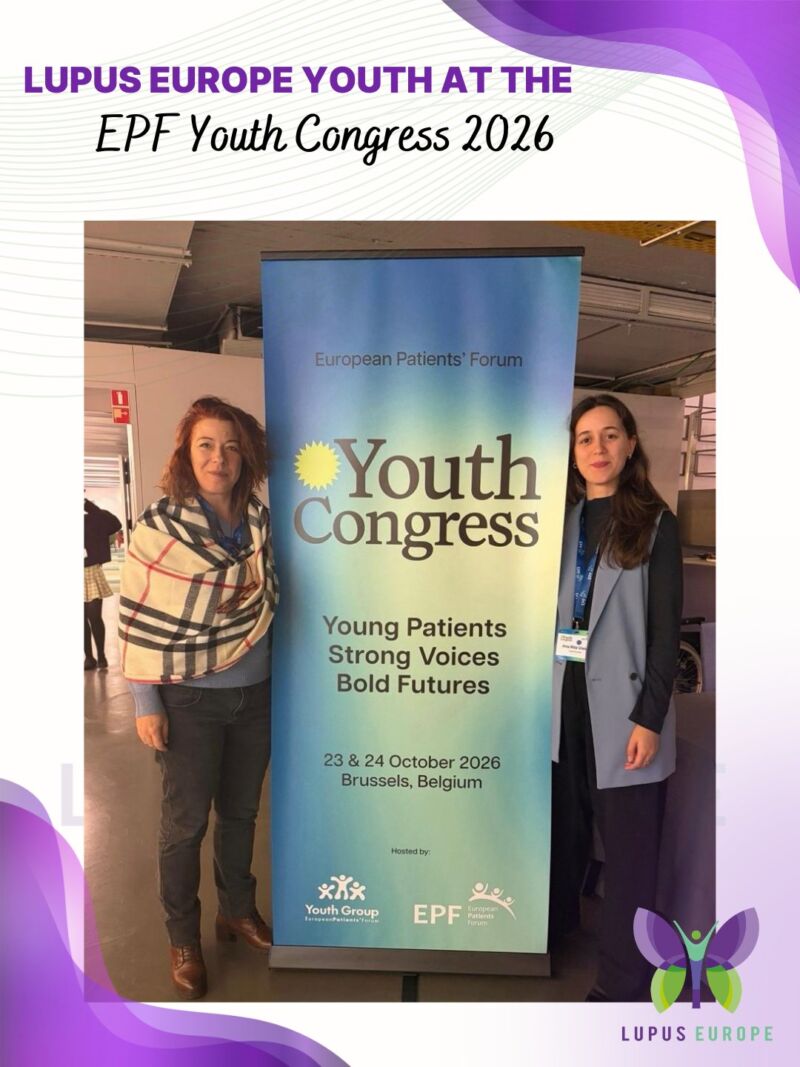
💜 Young people living with lupus are not only the future of patient advocacy. Their voices matter today!
On 23 and 24 October, LUPUS EUROPE was delighted to be represented at the first 𝗘𝗣𝗙 𝗬𝗼𝘂𝘁𝗵 𝗖𝗼𝗻𝗴𝗿𝗲𝘀𝘀 𝟮𝟬𝟮𝟲 in Brussels by Ana Rita Vieira, from the LUPUS EUROPE Youth Group, and Lena Koskina, LUPUS EUROPE's Youth Group Coordinator.
🌍 Organised by European Patients' Forum and its EPF Youth Group, the Congress brought together young patient advocates from across Europe to explore the challenges facing young people living with chronic conditions, from economic uncertainty and climate change to the barriers they encounter when trying to influence healthcare decisions.
🌟 One particularly important question ran through the discussions: 𝗵𝗼𝘄 𝗱𝗼 𝘄𝗲 𝗺𝗼𝘃𝗲 𝗯𝗲𝘆𝗼𝗻𝗱 𝘀𝗶𝗺𝗽𝗹𝘆 𝗴𝗶𝘃𝗶𝗻𝗴 𝘆𝗼𝘂𝗻𝗴 𝗽𝗲𝗼𝗽𝗹𝗲 𝗮 𝘀𝗲𝗮𝘁 𝗮𝘁 𝘁𝗵𝗲 𝘁𝗮𝗯𝗹𝗲, 𝗮𝗻𝗱 𝗲𝗻𝘀𝘂𝗿𝗲 𝘁𝗵𝗲𝘆 𝗵𝗮𝘃𝗲 𝗮 𝗿𝗲𝗮𝗹 𝘀𝗮𝘆 𝗶𝗻 𝘁𝗵𝗲 𝗱𝗲𝗰𝗶𝘀𝗶𝗼𝗻𝘀 𝗯𝗲𝗶𝗻𝗴 𝗺𝗮𝗱𝗲❓
The conversations also highlighted something easily overlooked: 𝗺𝗲𝗮𝗻𝗶𝗻𝗴𝗳𝘂𝗹 𝗽𝗮𝗿𝘁𝗶𝗰𝗶𝗽𝗮𝘁𝗶𝗼𝗻 𝗿𝗲𝗾𝘂𝗶𝗿𝗲𝘀 𝗺𝗼𝗿𝗲 𝘁𝗵𝗮𝗻 𝗮𝗻 𝗶𝗻𝘃𝗶𝘁𝗮𝘁𝗶𝗼𝗻. Young people living with chronic conditions are often balancing their health with education, employment and financial pressures. Advocacy opportunities need to recognise those realities, and not be accessible only to those who can afford the time and resources to participate.
🦋 At LUPUS EUROPE, supporting the Youth Group means actively helping create those opportunities, connecting young advocates with others across Europe and ensuring their perspectives can meaningfully contribute to the work we do.
Young people living with lupus are already advocates, bringing their experiences, ideas and knowledge into conversations that matter.
💜 Thank you to European Patients' Forum and its EPF Youth Group for bringing everyone together, and to Rita and Lena for representing LUPUS EUROPE at this important Congress! ...
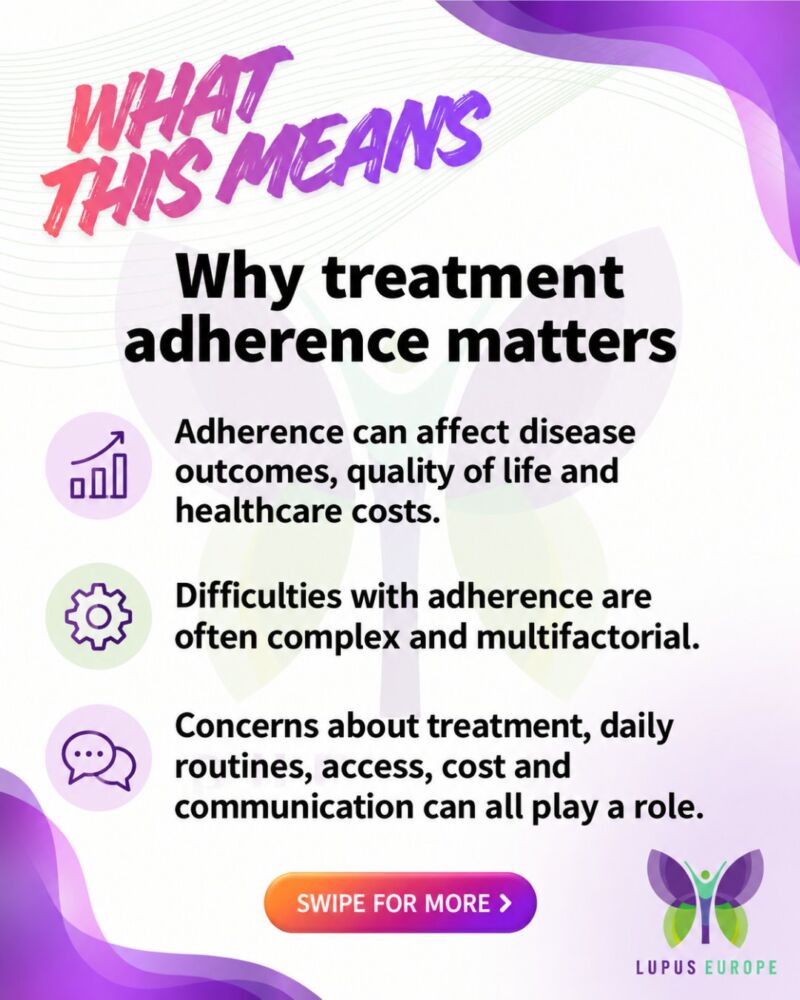
💜 Treatment adherence is important, complex and multifactorial.
But understanding the importance of treatment adherence is not the same as knowing how to support it in everyday clinical practice.
That’s why, in 2020, EULAR published its Points to Consider for the prevention, screening, assessment and management of nonadherence to treatment in people with rheumatic and musculoskeletal diseases.
But having recommendations is only the first step. How can we ensure they become part of everyday clinical practice?
🤩 An interesting new viewpoint published in EULAR Rheumatology Open, co-authored by Jeanette Andersen, Chair of the Lupus Europe Board, now explores the challenges of putting these recommendations into routine rheumatology care.
The article highlights that nonadherence is not simply a matter of individual patient behaviour. Concerns about treatment, practical difficulties, access to medication, socioeconomic circumstances and communication with healthcare professionals can all play a role.
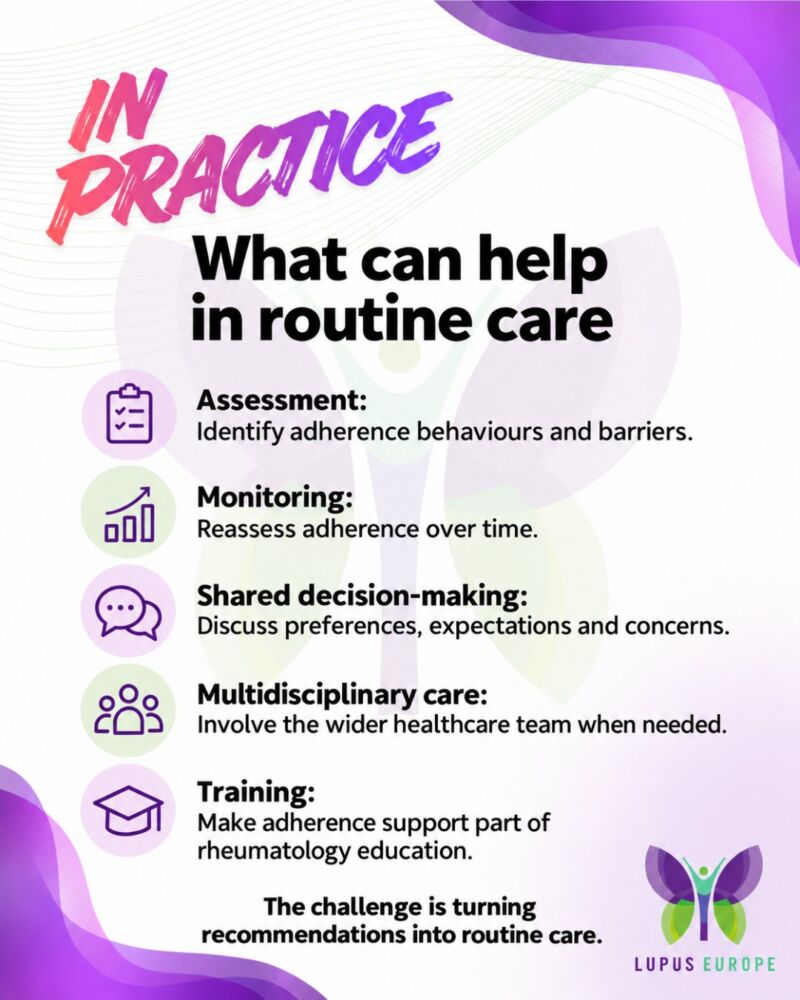
The authors highlight five key priorities for putting adherence support into routine rheumatology practice:
🔹 Assessment: Identifying adherence behaviours and the barriers behind them. 🔹 Monitoring: Reassessing adherence over time, as it may change throughout the disease course. 🔹 Shared decision-making: Discussing patients’ preferences, expectations and concerns through non-judgemental communication. 🔹 Multidisciplinary care: Involving the wider healthcare team according to individual needs. 🔹 Training: Making adherence support part of rheumatology education and professional development.
💜 The challenge is not the lack of recommendations, but making adherence assessment and support a routine part of rheumatology care.
Welcome to Lupus Europe. To join our pan-European community, please contact us.
Manage Cookie Consent
This website uses cookies to ensure you get the best experience on our website.
Functional
Always active
The technical storage or access is strictly necessary for the legitimate purpose of enabling the use of a specific service explicitly requested by the subscriber or user, or for the sole purpose of carrying out the transmission of a communication over an electronic communications network.
Preferences
The technical storage or access is necessary for the legitimate purpose of storing preferences that are not requested by the subscriber or user.
Statistics
The technical storage or access that is used exclusively for statistical purposes.The technical storage or access that is used exclusively for anonymous statistical purposes. Without a subpoena, voluntary compliance on the part of your Internet Service Provider, or additional records from a third party, information stored or retrieved for this purpose alone cannot usually be used to identify you.
Marketing
The technical storage or access is required to create user profiles to send advertising, or to track the user on a website or across several websites for similar marketing purposes.

 Alain Cornet
 Marisa Costa
 Katharine Wheeler