When it was first suggested that I write a patient story for Lupus Europe, I have to say that I felt a little uncomfortable. Firstly, I’m an intensely private person and have so far never wanted to write about myself or write a blog. Secondly my ‘lupus’ is relatively mild (in the medical sense rather than the ‘effect-on-life’ sense) and my diagnosis very mixed… it was then pointed out to me that I’m not alone in this and people need to hear that story.

My problems started years ago with the very easy and seemingly unimportant diagnosis of auto-immune hypothyroidism (Hashimoto’s) but although my thyroid problems were easily controlled with medication I still wasn’t well. As there is a history of auto-immune diseases including RA and Polymyositis in my family, doctors looked into it but blood tests can be very difficult sometimes and results came back with low positives for different things at different times, with nothing clear. A positive skin biopsy seemed to confirm the more lupus oriented diagnosis and so that’s what my problems were originally called even though I had some very strange symptoms for a lupus patient. In addition, my symptoms and blood tests indicated probable Antiphospholipid syndrome (though because of a lab problem this was never confirmed). Luckily that has never been a problem for me unless I forget to take my baby aspirin – I tried that once for a couple of weeks and I wouldn’t recommend it!

In the beginning it felt very important to have a name for my disease. Many years on, I have realised that things are not always that simple and, in some cases, it can be very difficult for doctors to be precise. Most people will ‘only’ have one diagnosis and that is more than enough but I think it is important for our doctors, especially generalists, to realise that things can be more complex.

At the time I was diagnosed, I had quite a lot of inflammation and the pain was stopping me from being very mobile or even walking so I was put on prednisolone along with Plaquenil®. Suddenly, I could walk again and, as a bonus, those strange ‘atypical’ symptoms also nearly disappeared. My life was far from normal but it was a lot better. Later, I was also put on Imuran® and my quality of life improved with fewer symptoms. My blood tests – which had become more precise in between time – improved and, after a few years, I was able to stop Imuran. I was also determined to stop taking prednisolone because of its significant side-effects. That was much more difficult and I failed repeatedly. In the end one of my doctors decided to try partially replacing my prednisolone doses with a small amount of hydrocortisone. In that way, I was able to stop prednisolone but during that time and the next two years I became ill again – blood tests and symptoms showed that it wasn’t a ‘lupus’ problem. My symptoms became severe but no-one could explain, and doctors repeatedly told me that nothing was wrong with me. I was sleeping 10-12 hour nights and taking 3-4 hour naps… and the only answer I got from doctors was that I was “making myself tired from sleeping too much”. I knew that I wasn’t choosing to sleep, instead, I couldn’t stop myself from sleeping, but I was too tired to fight anyone (this led to other problems where I should have fought administrative and legal issues as well). On top of the tiredness, my ‘atypical’ symptoms had come back.

Eventually, we discovered that something else had been hiding, something we are now sure I had prior to lupus – auto-immune Adrenal Insufficiency (Addison’s disease). All my doctors originally thought that my adrenals were having trouble because I had taken prednisolone (a common problem with high doses or longer term use) but no-one expected it to be a primary issue and a separate auto-immune disease. This delayed diagnosis. Suddenly all the ‘atypical’ symptoms such as severe nausea, low blood pressure and other ‘Addison’s’ symptoms were explained.

All in all, it took 11 years from my first Hashimoto’s diagnosis to the last of Addison’s. Some of those years were better than others but now I am doing much better with proper treatment for my Addison’s in addition to my maintenance treatment for connective tissue disease.

Being diagnosed with chronic illness can be a very distressing process but, because I grew up with a mother who has Polymyositis, I wasn’t terrified of it (despite my mother being told, 35 years ago, that she had five years to live – she is doing very well by the way). I am also lucky to be more fascinated by such problems than frightened of them. This has helped me to understand but also to be interested in improving things in a practical way for others when I can.

Of course, I grieved the loss of my job all those years ago but I then realised that there were things that I had always wanted to do but had never had time for. I started to do more photography than I had, and spend some time writing, both life-long passions.

I can now work a little again. I also volunteer, both in Lupus Europe and at the local dog club. I am no longer able to ride horses (once my profession) but have found a new hobby – sheep herding – which takes me out into nature, where I can think of nothing except the animals I’m working with.

I find sports very difficult to do because the repetitive movements don’t suit the chronic tendinitis I have nearly everywhere but I walk a lot with my dogs and cross fields to work the dogs with the sheep, feed the sheep and look after them. Staying active can seem very discouraging at first but I think it’s very important not to give up and to find something that you enjoy (and that your joints allow). If you enjoy it, you are much more likely to push yourself a little and keep going. I know that if I wasn’t as active as I am, I would feel my joints more and have less endurance and more tiredness than I do so I feel it is just as important as my medication – which I take without fail. I am also lucky to have ongoing access to physiotherapy which helps me maintain a level of suppleness that I may lose otherwise. It also helps pain a lot.

The other day my generalist had a new doctor working with him and he asked me what advice I would give her. I said that although people like me are relatively rare, it’s essential not to put all symptoms in one ‘basket’ just because the patient already has a serious diagnosis such as lupus. By doing that, my Addison’s was missed for years and made me very sick, meaning I lost almost two years of ‘living’. Happily, I am now very busy making up that time!

11301521_10207221075190775_1516787352_n

Katharine lives in Belgium and is a member of the Association Lupus Erythémateux

img_288


Live Facebook Feed

Comments Box SVG iconsUsed for the like, share, comment, and reaction icons

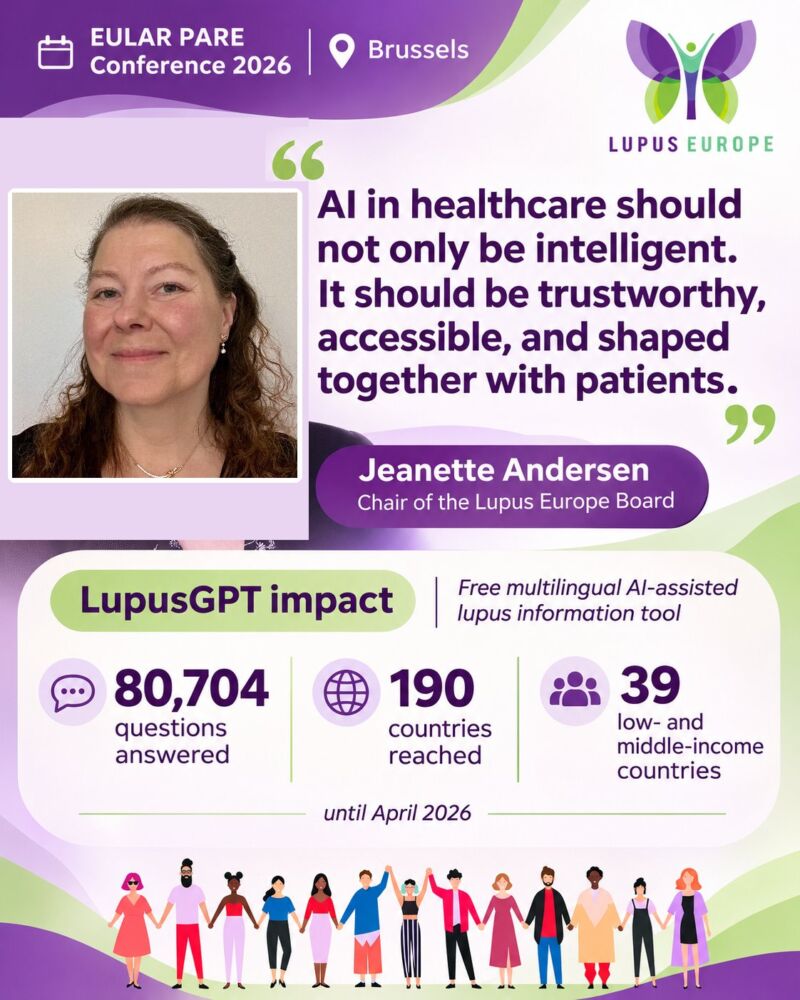
💜 We've taken part in the EULAR PARE Conference 2026 in Brussels! And what an interesting opportunity to discuss the future of AI in healthcare!

🌍 Bringing together more than 100 delegates and speakers from across Europe and beyond, the conference explored some of the most important questions surrounding artificial intelligence in rheumatology and patient advocacy.

From the opportunities and risks of AI to health inequalities, accessibility and European health policy, the discussions highlighted why patient perspectives must be part of the conversation.

🤩 We were particularly proud to see Jeanette Andersen, Chair of the Lupus Europe Board, sharing our experience with #LupusGPT in her presentation, “AI as a Partner in Care: Empowering the RMD Community with Information”.

💡 Jeanette explained how #LupusGPT was developed with patients and clinicians to offer free, multilingual access to reliable lupus information based on validated sources.

She also introduced #EasyLupus, which provides the same trusted information in simpler language, highlighting why accessibility must be considered when developing AI tools.

But one of the most important messages from her presentation went beyond technology.

💜 Patient organisations have much more to contribute to AI than simply using tools developed by others.

As Jeanette highlighted, patient organisations bring lived experience, knowledge of unmet needs, trusted information and an understanding of the barriers people face when accessing health information.

Technology alone cannot tell us what patients really need or what makes a tool genuinely useful.

Patients and patient organisations should not simply be users of AI. They should help shape its development.

👏 A big thank you to EULAR PARE for bringing together so many different perspectives and creating space for meaningful discussions about the future of healthcare and patient involvement!
...

💜 Weve taken part

🦋 One of the greatest strengths of patient organisations is the support, understanding and sense of community they offer to people living with lupus. 💜

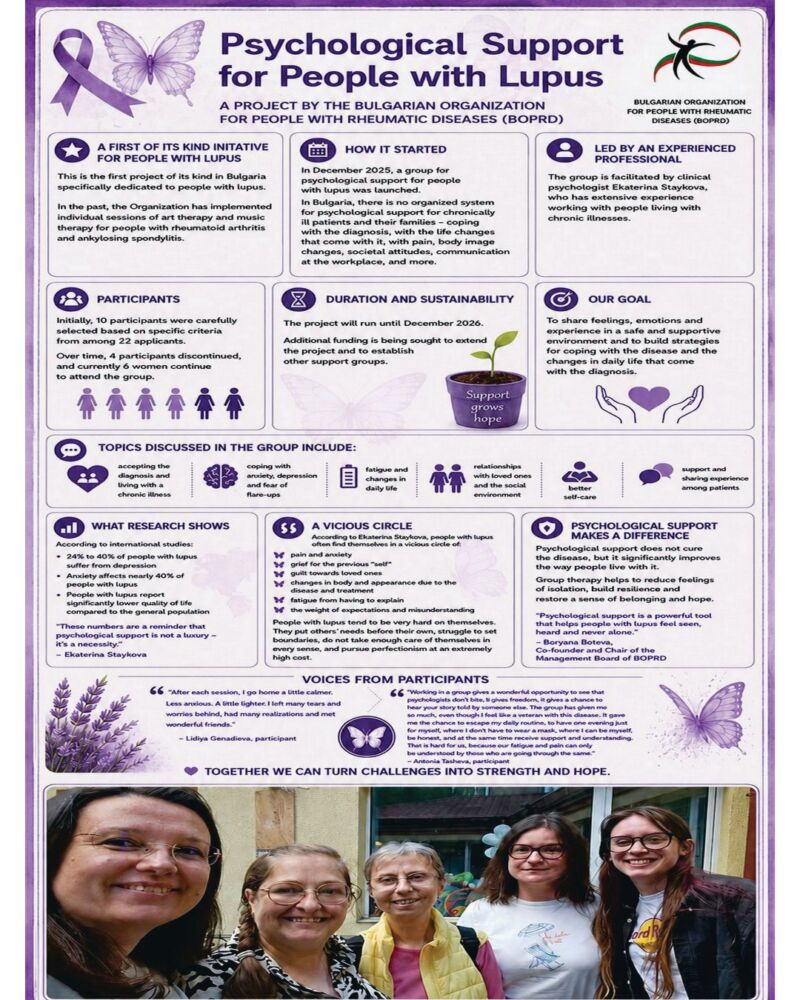
🇧🇬 A great example comes from Организация на пациентите с ревматологични заболявания, who shared their psychological support initiative at the #LupusConvention!

💜 Launched in December 2025, this pilot project provides a safe and supportive space where participants can share their experiences and discuss the challenges of living with lupus, from fatigue and anxiety to relationships and everyday life.

👥 Led by a clinical psychologist, the group currently brings together six women. The project is expected to run until December 2026, while the organisation explores funding opportunities to continue and expand the initiative.

Thank you to our Bulgarian colleagues for sharing their experience, and congratulations on the amazing job you are doing! ❤️

🌍 This is just one example of the valuable work patient organisations are doing across Europe, often responding to needs that go beyond medical care. We'll share more in the coming days!

💜 Are you living with lupus? You don't have to navigate everything alone! Your national lupus organisation may offer information, support, activities and opportunities to connect with others who understand your experiences.

🔗 Find your national lupus organisation and get in touch:
lupus-europe.org/lupus-members/
...

Image attachment
Image attachment

💜 Young people living with lupus are not only the future of patient advocacy. Their voices matter today!

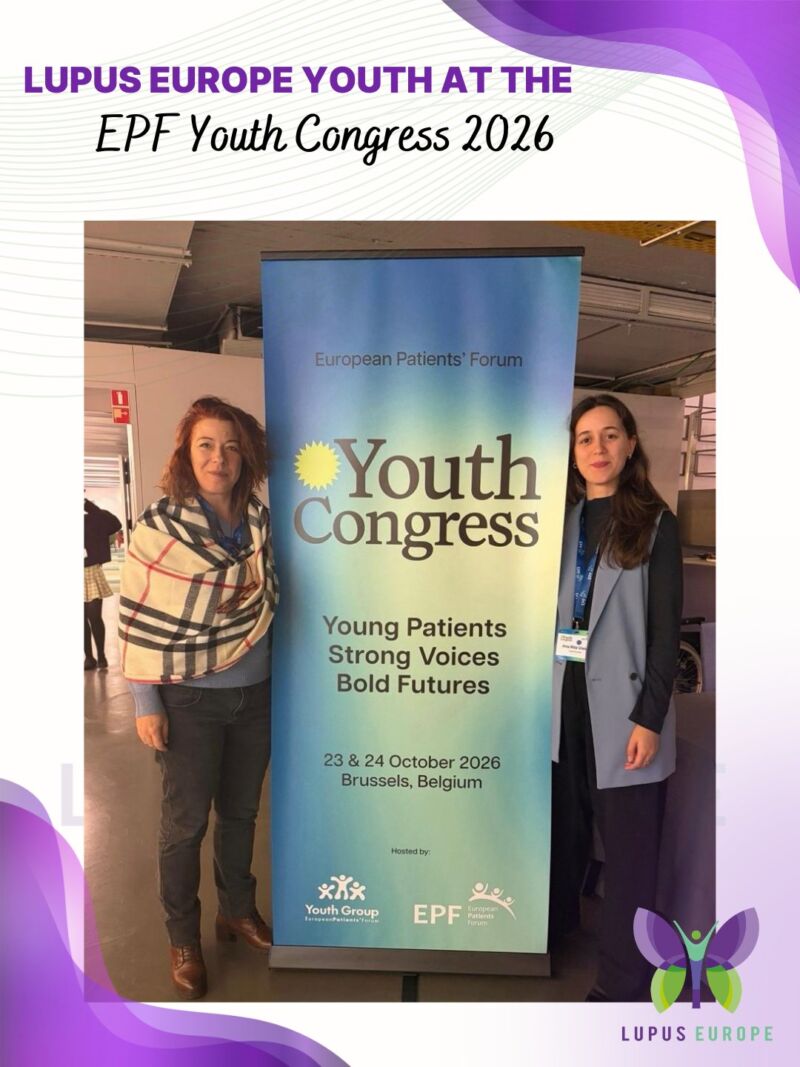
On 23 and 24 October, LUPUS EUROPE was delighted to be represented at the first 𝗘𝗣𝗙 𝗬𝗼𝘂𝘁𝗵 𝗖𝗼𝗻𝗴𝗿𝗲𝘀𝘀 𝟮𝟬𝟮𝟲 in Brussels by Ana Rita Vieira, from the LUPUS EUROPE Youth Group, and Lena Koskina, LUPUS EUROPE's Youth Group Coordinator.

🌍 Organised by European Patients' Forum and its EPF Youth Group, the Congress brought together young patient advocates from across Europe to explore the challenges facing young people living with chronic conditions, from economic uncertainty and climate change to the barriers they encounter when trying to influence healthcare decisions.

🌟 One particularly important question ran through the discussions: 𝗵𝗼𝘄 𝗱𝗼 𝘄𝗲 𝗺𝗼𝘃𝗲 𝗯𝗲𝘆𝗼𝗻𝗱 𝘀𝗶𝗺𝗽𝗹𝘆 𝗴𝗶𝘃𝗶𝗻𝗴 𝘆𝗼𝘂𝗻𝗴 𝗽𝗲𝗼𝗽𝗹𝗲 𝗮 𝘀𝗲𝗮𝘁 𝗮𝘁 𝘁𝗵𝗲 𝘁𝗮𝗯𝗹𝗲, 𝗮𝗻𝗱 𝗲𝗻𝘀𝘂𝗿𝗲 𝘁𝗵𝗲𝘆 𝗵𝗮𝘃𝗲 𝗮 𝗿𝗲𝗮𝗹 𝘀𝗮𝘆 𝗶𝗻 𝘁𝗵𝗲 𝗱𝗲𝗰𝗶𝘀𝗶𝗼𝗻𝘀 𝗯𝗲𝗶𝗻𝗴 𝗺𝗮𝗱𝗲❓

The conversations also highlighted something easily overlooked: 𝗺𝗲𝗮𝗻𝗶𝗻𝗴𝗳𝘂𝗹 𝗽𝗮𝗿𝘁𝗶𝗰𝗶𝗽𝗮𝘁𝗶𝗼𝗻 𝗿𝗲𝗾𝘂𝗶𝗿𝗲𝘀 𝗺𝗼𝗿𝗲 𝘁𝗵𝗮𝗻 𝗮𝗻 𝗶𝗻𝘃𝗶𝘁𝗮𝘁𝗶𝗼𝗻. Young people living with chronic conditions are often balancing their health with education, employment and financial pressures. Advocacy opportunities need to recognise those realities, and not be accessible only to those who can afford the time and resources to participate.

🦋 At LUPUS EUROPE, supporting the Youth Group means actively helping create those opportunities, connecting young advocates with others across Europe and ensuring their perspectives can meaningfully contribute to the work we do.

Young people living with lupus are already advocates, bringing their experiences, ideas and knowledge into conversations that matter.

💜 Thank you to European Patients' Forum and its EPF Youth Group for bringing everyone together, and to Rita and Lena for representing LUPUS EUROPE at this important Congress!
...

💜 Young people li

🔊 Hot off the press!

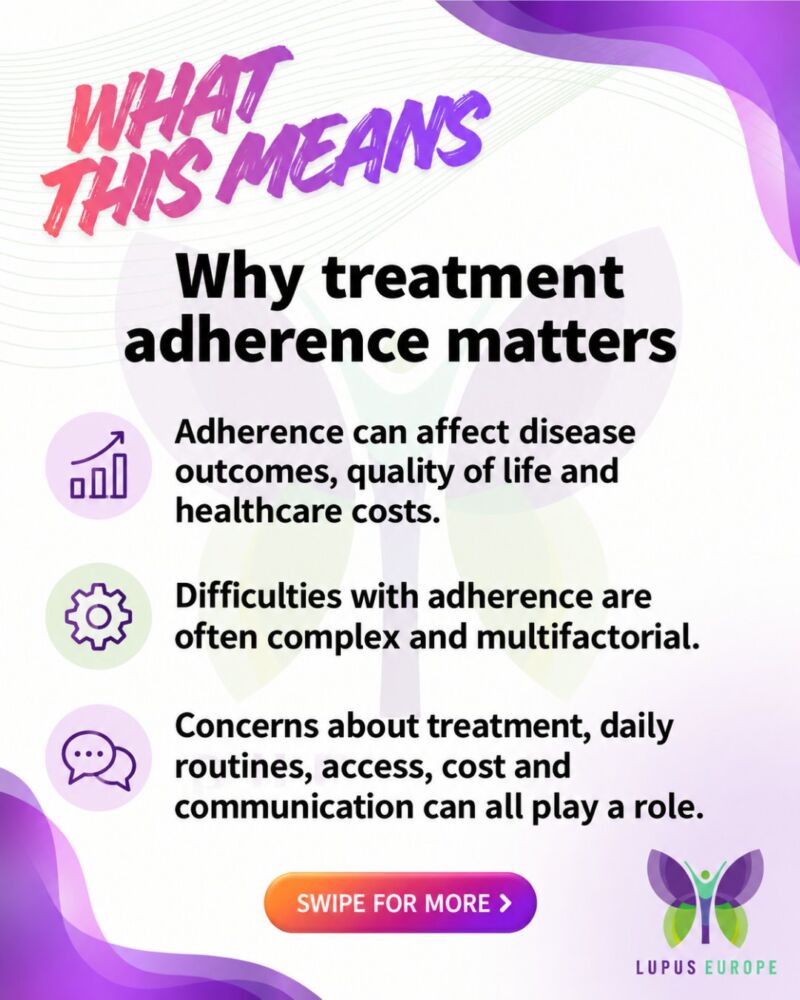
💜 Treatment adherence is important, complex and multifactorial.

But understanding the importance of treatment adherence is not the same as knowing how to support it in everyday clinical practice.

That’s why, in 2020, EULAR published its Points to Consider for the prevention, screening, assessment and management of nonadherence to treatment in people with rheumatic and musculoskeletal diseases.

But having recommendations is only the first step. How can we ensure they become part of everyday clinical practice?

🤩 An interesting new viewpoint published in EULAR Rheumatology Open, co-authored by Jeanette Andersen, Chair of the Lupus Europe Board, now explores the challenges of putting these recommendations into routine rheumatology care.

The article highlights that nonadherence is not simply a matter of individual patient behaviour. Concerns about treatment, practical difficulties, access to medication, socioeconomic circumstances and communication with healthcare professionals can all play a role.

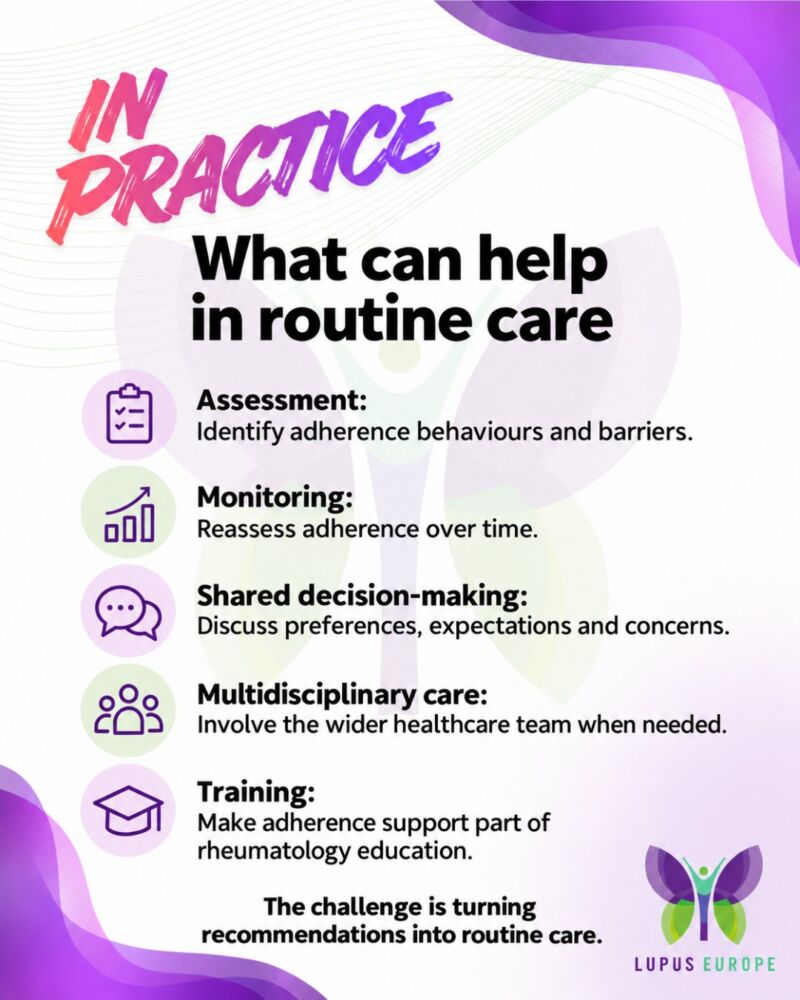
The authors highlight five key priorities for putting adherence support into routine rheumatology practice:

🔹 Assessment: Identifying adherence behaviours and the barriers behind them.
🔹 Monitoring: Reassessing adherence over time, as it may change throughout the disease course.
🔹 Shared decision-making: Discussing patients’ preferences, expectations and concerns through non-judgemental communication.
🔹 Multidisciplinary care: Involving the wider healthcare team according to individual needs.
🔹 Training: Making adherence support part of rheumatology education and professional development.

💜 The challenge is not the lack of recommendations, but making adherence assessment and support a routine part of rheumatology care.

📖 Read the open-access viewpoint: doi.org/10.1016/j.ero.2026.100261
...

Image attachment
Image attachment
Image attachment
Image attachment
LUPUS EUROPE Uniting people with Lupus throughout Europe
Send