Much remains to be discovered about Lupus. Not just disease mechanisms and new treatments, but also a better understanding of what it means to live with lupus, the day to day issues faced by patients and their relatives, the impact on social and psychological functioning, … To help people living with lupus bring their life experience to the table, LUPUS EUROPE created Patient panels, by and For people with lupus. The panels bring together 10-15 persons living with lupus from all over Europe to discuss topics of interest. the discussions are animated by People living with lupus themselves, creating a unique atmosphere in the group, and allowing to speak in full confidence, without the fear of the “white blouse”, or the impression that “there must be a correct answer”. Participants can simply be themselves and speak their voice…
3 main patient panels have taken place so far:
Patient panel I on treatment
In November 2014, 10 Lupus affected persons from 7 countries shared their experience about “treatment”, with the view to help improve the quality of life of people living with lupus. The Panel Brought new understanding of treatment, which participants defined as “any product or activity that aims at improving the person with lupus’ quality of life” and resulted in the issuance of 3 letters addressed respectively to People living with lupus, patients organizations, and the medical community, addressing how they each can help in this area. A full report of this panel can be found here.
Patient panel II on the burden of living with lupus
In March 2016 , a new panel aimed at further exploring the burden of living with lupus, and to dive into the burden 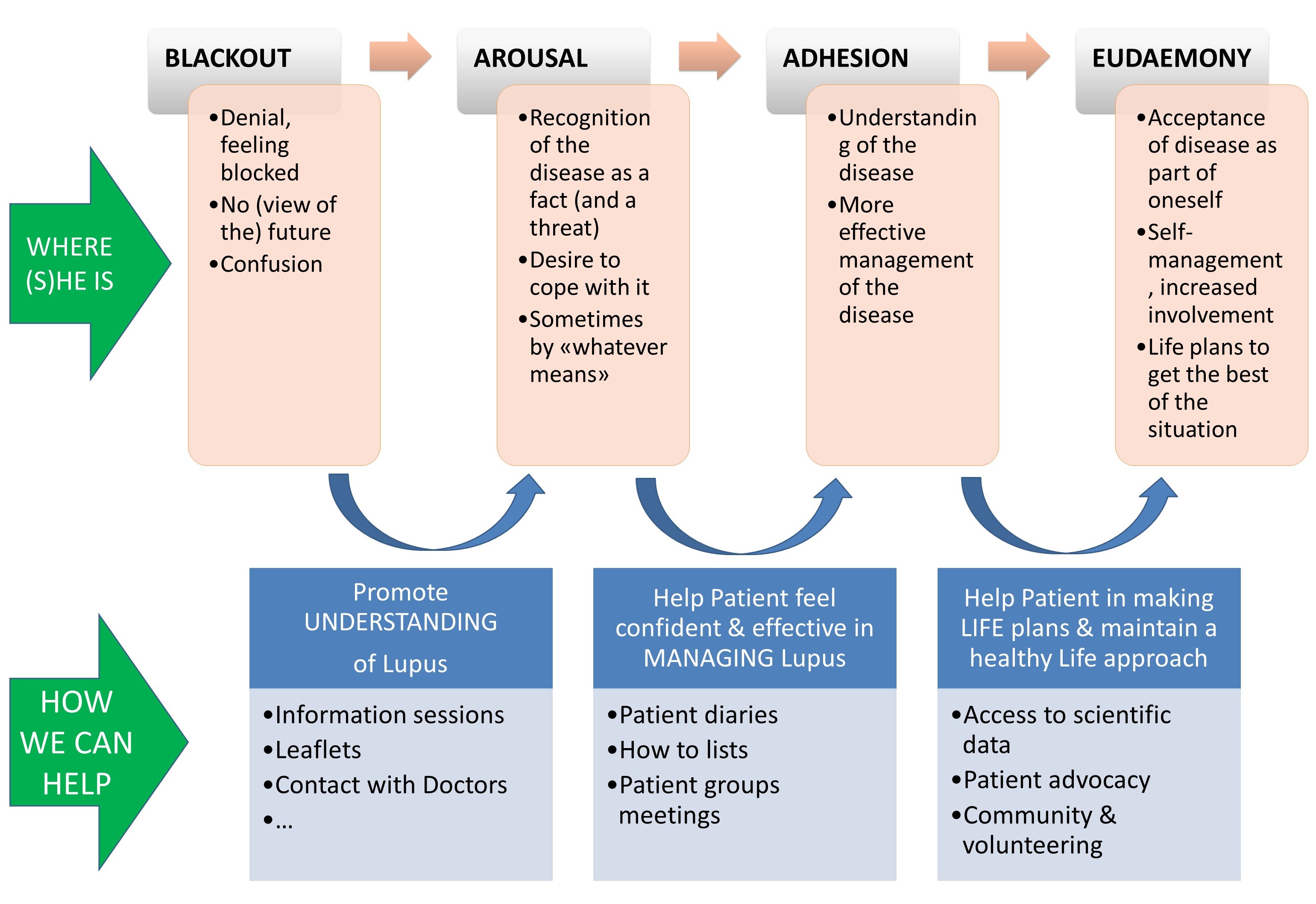 of treatment day after day. One of its objective was to understand the journey with the disease, how the Patient Engagement model used in Health psychology applies to people living with lupus, and the consequences for Patient organisations. The model was validated and its implications for patient organisations, and how they need to address differently patients based on where they are in their journey with lupus are significant. A complete report on this patient panel can be found here.
This panel also resulted in a publication by D. Mazzoni in the magazine Muskulo-skeletal care, which you can download here .
A specific session was dedicated to Clinical trials, seeking to understand what would cause patients to join or not a Clinical trial, and too stay committed till the end.
Patient panel III on Youth
In May 2018, our 3rd patient panel was organised on the theme of youth. 10 Lupus affected young people, aged 18 to 26, from all over Europe shared their experience of living with lupus. The agenda was focused on the topics of interest and issues they identified themselves ahead of the Friday to Sunday gathering. While they considered taking pills every day as a key problem, they preferred to focus on the collective issues of being understood by friends and family and having to live with limitations. A big “Wow” was the feeling of guilt expressed by several female participants (guilt of imposing limits to their partners, guilt of not being able to do as much as others, …). This guilt seems to be a very important underlying dimension of their social and affective life, which is likely much misunderstood by doctors and patient organizations. Young people with lupus remain fundamentally more positive on their life with lupus than the average patients. Their messages to other young people with lupus are reassurance, and positivism, and while they perceive lupus as being “all over their lives”, they want to make sure they are not ruled by it, and want to have no obligations relating to it… On the medical front, when we probed what would drive them to consider joining a clinical trial, clear first media is their lupus doctor, second are national lupus groups and LUPUS EUROPE. A full report of this panel can be downloaded here.
LUPUS EUROPE intends to continue running patient panels, so stay tuned on this page, where more information will be available as we progress 🙂